In this article (5 sections)
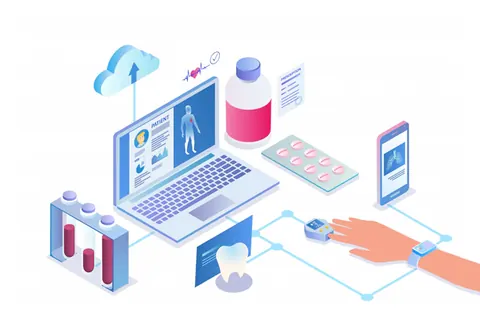
In this technology-driven world, the effective management and utilization of health information have become paramount in making certain quality healthcare services and improving patient outcomes. Health information systems, or HIS, play a pivotal role in this process by providing the framework for collecting, storing, analyzing, and disseminating related data. In this blog post, We will look at the basic concepts. of a health information system,
Key Components of Health Information Systems
A health information system that works well is composed of some key components that work together to improve the quality and functioning of the system. The key components of HIS are explained in detail in the sections following:
1. Health Records in Electronic Form (EHRs)
Paper charts used by patients are physically replaced by Electronic Health Records (EHRs). They offer complete and healthy health history information on patients, including lab test results, MRI images, vaccination plans, medical diagnoses, and treatment plans.
- Improved Coordination: Offering a comprehensive picture of a patient’s health, promotes improved coordination amongst healthcare practitioners.
- Patient Engagement: Having access to medical records enables patients to take a more active role in their care and improve self-management.
- Increased Quality: Saves time and money by reducing paperwork and test duplication.
- Data Accessibility: Authorized users can access patient data at any time and from any location.
2. Health Information Exchange (HIE)
Healthcare providers and groups may safely and quickly share patient data thanks to health information exchange, or HIE. Ensuring sure the appropriate information is available must be achieved, the exchange of health data (HIE) needs to improve healthcare quality, safety, and savings.
- Directed Exchange: A secure method for healthcare providers to connect with and receive patient information.
- Query-Based Exchange: Lets healthcare professionals look up and apply patient data from other healthcare professionals.
- Patient-Mediated Exchange: Allows patients to control and distribute their medical records to preferred providers.
3. Practice Management Software
Healthcare practices can better handle day-to-day operations including scheduling appointments, billing, and administrative duties with the use of practice management software. It frequently interfaces with EHR systems to enhance performance and offer a smooth workflow.
- Scheduling: Proper management and planning of appointments.
- Billing and Claims: simplifies the handling of insurance claims and billing procedures.
- Reporting: Produces reports on a range of practice management topics.
- Communication: Promotes communication between medical professionals and patients.
4. Clinical Decision Support Systems (CDSS)
Clinical Decision Support Systems (CDSS) are tools that, to improve patient care, provide healthcare providers with knowledge and patient-specific data that is intelligently filtered or given at the right times. To help with decision-making, CDSS may offer alerts, reminders, and clinical tips.
- Improved Accuracy: Boosts the precision of diagnosis and effectiveness of treatment.
- Error Reduction: Reduces the possibility of mistakes in diagnosis and medication.
- Efficiency: Shortens the time required for decision-making and improves medical procedures.
- Evidence-Based Practice: Promotes the application of protocols and standards based on empirical data.
5. Patient Portals
Patient portals are safe internet resources where patients can view their medical records. Patients can consult their medical records, make appointments, ask for prescription refills, and get in touch with their healthcare professionals using these portals.
- Patient engagement: Increasing the participation of patients in their healthcare is known as patient engagement.
- Convenience: Makes health services and information easily accessible.
- Better Communication: Promotes more effective communication between medical professionals and patients.
- Better Satisfaction: Provides timely and easily available information, which raises patient satisfaction.
6. Remote Patient Monitoring (RPM)
Digital devices are used in remote patient monitoring, or RPM, to keep an eye on patients’ health outside of conventional healthcare settings. RPM devices gather patient health data and send it to medical professionals for review and advice.
- Chronic Disease Management: Assists in the control of long-term illnesses including diabetes and high blood pressure.
- Post-Operative Care: Tracks patients’ post-operative recovery to avoid problems.
- Vital signs: track is part of preventive care and feels for early signs of health problems.
- Telehealth Integration: Provides full remote care in conjunction with telehealth services.
7. Mobile Health (mHealth)
The employing of mobile gadgets and applications to assist healthcare practices has become known as mobile health, or mHealth for short. Health applications, wearable technology, and telehealth services are examples of mHealth solutions that let people monitor their health and connect with doctors from a distance.
- Health tracking: Mobile devices and mobile applications for monitoring health, nutrition, and exercise parameters.
- Telemedicine: Using mobile devices to provide medical advice and consultations remotely.
- Health education: Using mobile platforms to spread knowledge and instruction about health issues.
- Medication Adherence: Alerts and reminders to assist patients in following their prescribed regimens.
Importance of Health Information Systems
Health Information Systems (HIS) are important for improving patient care and operational productivity by providing accurate, up-to-date information and facilitating better coordination among healthcare providers. They also increase data security, support research, and enable informed decision-making.
Better Patient Care
This makes it possible for medical professionals to obtain accurate and comprehensive patient data, which helps with diagnosis and treatment planning.Operational Efficiency
Healthcare personnel can concentrate more on patient care by automating administrative chores, which minimizes paperwork.Data Security and Accuracy
Reduces the possibility of errors and data breaches by guaranteeing that patient data is current, correct, and safe.Research and Innovation
Offers an extensive database for the advancement of novel therapies and technological solutions, as well as medical research.Informed Decision-Making
Helping healthcare professionals make data-driven decisions to improve resource allocation and health outcomes is recognized as informed decision-making.
Types Of Health Management Information Systems (HMIS)
A health management information system (HMIS) is a system for managing healthcare data: collecting, storing, managing and transmitting patients' electronic medical records, running hospital operations, or supporting healthcare policy decisions. There are several types of HMIS:
| Type | What it does |
|---|---|
| Clinical Information Systems (CIS) | Support patient care by giving clinicians medical history, medication lists and test results, improving the accuracy of diagnoses and treatment plans |
| Management Information Systems (MIS) | Run the administrative side of a facility, such as staff scheduling, financial management and resource allocation |
| Decision Support Systems (DSS) | Analyse large datasets to find trends and patterns and give evidence-based recommendations for patient care |
| Electronic Medical Records (EMR) Systems | Electronic copies of patients' paper charts that providers can easily access and update |
| Health Information Exchange (HIE) | Share patient information across healthcare organisations, so providers see up-to-date data wherever the patient is treated |
| Telehealth Systems | Deliver care remotely through virtual consultations, remote monitoring and telemedicine, expanding access in rural and underserved areas |
Types Of Clinical Information Systems
Besides EHRs (covered above), types of clinical information systems include:
- Radiology Information Systems (RIS): manage imaging orders and results.
- Laboratory Information Systems (LIS): automate test requests, sample tracking and results reporting.
- Pharmacy Information Systems: track medication orders, automate dispensing and help prevent drug interactions. See software used in hospital pharmacy.
- Patient Monitoring Systems: monitor vital signs in real time and alert staff to critical changes.
Components Of An Effective HMIS
- Data collection and storage: captures all relevant patient and operational data and stores it securely.
- User-friendly interface: staff can use it without extensive training.
- Integration with other systems: shares data with other healthcare information systems.
- Security features: protect patient data from unauthorised access and breaches.
- Support and maintenance: user assistance, troubleshooting and software updates.
HMIS In Primary Health Care
At the primary care level, an HMIS collects and manages data on community health services. It streamlines patient records, improves resource allocation, monitors health trends and supports decisions on preventive care, vaccinations and the treatment of common illnesses in the community.
Conclusion
A well-functioning Health Information System is an essential tool that helps healthcare practitioners provide quality healthcare services. The HIS comprises various components that work together to collect, process, manage, and analyze health data for decision-making.
With the prevalence of digital healthcare systems, the need to have a well-structured and successful HIS has become mandatory. Healthcare facilities must invest in a well-functioning HIS to optimize healthcare services and deliver exceptional patient care.
Get actionable insights from patient experiences with LazyMonkey’s smart patient feedback software efficient and user-friendly.
Frequently Asked Questions
What Security Measures Are Essential In A Health Information System?
Security measures include encryption, user authentication, access controls, and compliance with healthcare data protection regulations like HIPAA.
How Does Interoperability Impact HIS?
Interoperability ensures that different systems and healthcare providers can share and access data seamlessly, improving care coordination.
What Are The Challenges In Implementing A Health Information System?
Challenges include high implementation costs, staff training, data privacy concerns, and system integration with existing healthcare infrastructure.
How Does HIS Support Healthcare Analytics?
HIS collects and processes patient data, allowing healthcare providers to analyze trends, predict disease outbreaks, and improve decision-making.
What Is An HMIS?
A health management information system (HMIS) manages healthcare data, including patient records, hospital operations and support for healthcare policy decisions.
What Are The Types Of Health Management Information Systems?
The main types are Clinical Information Systems, Management Information Systems, Decision Support Systems, Electronic Medical Records systems, Health Information Exchange and Telehealth systems.
What Are The Components Of A Health Management Information System?
An effective HMIS needs data collection and storage, a user-friendly interface, integration with other systems, strong security features, and ongoing support and maintenance.
Filed under Hospital Technology · First published