In this article (11 sections)
- What is Customer Feedback?
- Customer Feedback: The Backbone of Business Growth
- How Do You Collect Customer Feedback?
- Why Customer Feedback is a Great Tool for Businesses?
- Types of Customer Feedback
- How to Build a Customer Feedback Loop
- How to Use Feedback Insights for Your Product Roadmap
- Hotel Guest Feedback: Why It Matters and How to Collect It
- Common Mistakes Businesses Make With Customer Feedback
- Conclusion
- Frequently Asked Questions
Customer feedback is one of the most powerful tools a business can use to improve its products, services, and customer experience. It gives businesses valuable insights into what their customers truly think and feel, allowing them to make data-driven decisions.
In this article, we will explore why customer feedback is important, the value it brings to your business, and how LazyMonkey can help you leverage this tool to grow and thrive.
What is Customer Feedback?
Customer feedback refers to the opinions, thoughts, and suggestions provided by customers regarding their experience with a product or service. It can be collected through various methods such as surveys, reviews, social media comments, and direct interactions.
Understanding and effectively managing customer feedback is crucial for business growth. Learn more about customer feedback management here.
Customer Feedback: The Backbone of Business Growth
Customer feedback is important for several reasons. It helps businesses understand their customers better, enhances customer loyalty, and drives continuous improvement. Here are some key reasons why customer feedback should be a priority for any business:
1. Improves Customer Experience
The primary goal of any business is to provide a positive experience for its customers. By collecting feedback, businesses can identify areas of improvement in their products or services.
Understanding how customers perceive your offerings allows you to address pain points, making the customer journey smoother and more enjoyable.
2. Enhances Product Development
Customer feedback provides invaluable insights into how well your products are meeting the needs of your target audience. It highlights which features are working and which ones need refinement.
This data can guide your product development efforts, ensuring that future products align more closely with customer expectations.
3. Builds Customer Loyalty
When customers feel heard and understood, they are more likely to remain loyal to your brand. By actively requesting and acting on customer feedback, you show that you care about their opinions and are committed to delivering the best experience.
Loyal customers are more likely to recommend your business to others, which can lead to increased sales and brand advocacy.
4. Increases Revenue and Profits
Happy, loyal customers are more likely to make repeat purchases and spend more money on your products or services. By acting on feedback, businesses can improve customer satisfaction, which in turn boosts customer retention and increases revenue.
Satisfied customers are also more likely to become brand advocates, bringing in new customers through positive word-of-mouth.
5. Provides Competitive Advantage
In today’s competitive business environment, standing out from the crowd is essential. By collecting and acting on customer feedback, you can differentiate your business from competitors.
Customers are more likely to choose a business that listens to them and responds to their needs, giving you an edge over those who neglect customer input.
How Do You Collect Customer Feedback?
Collecting customer feedback is crucial to understanding your customers and improving your business. There are various ways to gather customer feedback, depending on the type of business and the preferences of your customers. Some of the most popular methods include:
1. Surveys
Surveys are one of the most effective ways to collect customer feedback. They can be distributed via email, website pop-ups, or social media platforms.
Online surveys allow businesses to ask targeted questions and gather quantitative data that can be analyzed to identify trends.
2. Customer Reviews
Customer reviews, whether on your website or third-party review sites, are a valuable source of feedback. Reviews provide detailed insights into customers’ experiences, both positive and negative.
By regularly monitoring and responding to reviews, businesses can gain a better understanding of customer sentiment.
3. Social Media Listening
Social media is a great platform to engage with customers and gather feedback. By monitoring comments, mentions, and direct messages on social media channels, businesses can quickly identify customer concerns and opinions.
Social media listening tools can help you track customer feedback in real-time.
4. Direct Interactions
Sometimes, the best feedback comes directly from customers. Engaging in face-to-face conversations, phone calls, or live chats provides businesses with the opportunity to ask open-ended questions and gain in-depth insights.
These interactions help build a strong relationship with customers while providing valuable feedback.
5. Focus Groups
Focus groups consist of a small group of customers who are asked to discuss their opinions about your products, services, or brand. This qualitative research method provides detailed insights into customer behavior, needs, and preferences.
Why Customer Feedback is a Great Tool for Businesses?
Customer feedback is a great tool for businesses because it allows you to:
1. Understand Customer Needs
Feedback provides insights into what your customers really want, helping you tailor your offerings to meet their needs more effectively.
2. Solve Problems Quickly
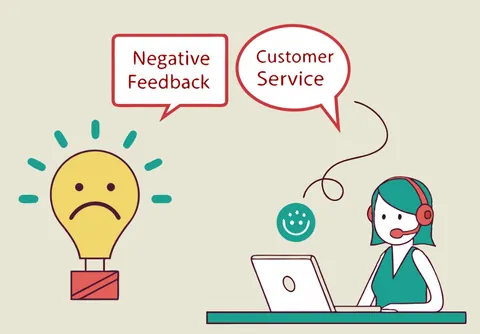
Negative feedback highlights potential issues with your products or services, allowing you to address them before they escalate.
3. Make Data-Driven Decisions
By collecting feedback and analyzing the data, you can make informed decisions that improve your business operations.
4. Enhance Marketing Efforts
Customer feedback can be used to refine your marketing strategies by aligning your messaging with customer preferences.
Types of Customer Feedback
Customer feedback does not always arrive as a survey response. Knowing the main types helps, because each one tells you something different and needs a different way of listening.
| Type | Where it comes from | What it tells you |
|---|---|---|
| Direct feedback | Surveys, feedback forms, requested reviews, emails and customer service conversations | Clear, structured answers to the questions you ask |
| Indirect feedback | Social media posts, online forums and third-party review sites | Unfiltered opinions customers share publicly, often without addressing you |
| Implicit feedback | Behavior such as browsing activity, purchase history and time spent on product pages | Preferences and interests customers reveal through actions rather than words |
Feedback can also be sorted by what it says:
- Positive feedback shows what customers value and what is working.
- Negative feedback points to problems that need fixing.
- Constructive feedback offers specific suggestions for improving the product or service.
- Neutral feedback gives factual observations without strong emotion, which can still reveal useful details.
How to Build a Customer Feedback Loop
A customer feedback loop is a repeating process: you collect feedback, analyze it, act on it and then tell customers what changed. Closing the loop is what turns feedback from a pile of opinions into steady improvement.
- Collect feedback at every touchpoint. Use surveys, review sites, social media messages, support calls and chats. A QR code on receipts, product packaging, store displays or in hotel rooms lets customers respond at the moment of the experience. Short surveys tend to get more responses.
- Organize and categorize it. Group comments by theme, such as product features, customer service or delivery, so that recurring issues and recurring praise stand out. A spreadsheet works at first; sentiment analysis tools help as volume grows.
- Prioritize by urgency and impact. Not all feedback carries equal weight. Fix the issues that come up most often and affect the most customers first.
- Act on it. Assign each issue to the team that owns it, set a timeline, and test changes before rolling them out fully.
- Tell customers what changed. Share updates through newsletters, social media posts and replies to reviews, and follow up with the customers who raised the issue to confirm it is resolved.
- Measure the result. Compare ratings and reviews before and after the change. Metrics such as Net Promoter Score (NPS) and repeat purchases show whether customers noticed.
- Repeat. A feedback loop is not a one-time project. Review customer insights on a regular schedule, for example every quarter.
Speed matters at every step. Feedback collected in real time lets you deal with a problem while the customer is still with you, before a small issue turns into rework, complaints or lost customers.
A customer feedback management system such as LazyMonkey can run much of this loop: customers give feedback by scanning a QR code with no app to install, issues are escalated to the right person, and real-time dashboards show trends across locations.
How to Use Feedback Insights for Your Product Roadmap
Once feedback is organized, it becomes a planning tool. Feedback insights show what to build next, what to fix first and where to expand.
- Look for repeated requests. When the same feature or service is asked for again and again, it signals an opportunity to add it or expand into it.
- Rank ideas by impact. Use how often something is requested and how much it affects satisfaction to decide where to spend time and budget.
- Validate before you build. Turn promising suggestions into new services through brainstorming, prototyping and testing.
- Improve what already exists. Adding requested features to current products increases their value and can help you reach new markets.
- Watch for early warning signs. A rising number of complaints about one area flags a risk before it leads to churn or damages your reputation.
- Keep quality consistent. As you add services based on feedback, keep monitoring so new offerings meet the same standard as existing ones.
Using Feedback to Refine Sales and Upsell Offers
The same insights help sales and marketing teams. Feature requests and complaints often point to what customers would pay more for. Frequent concerns about shipping delays, for example, can become an expedited delivery option, and a feature many users ask for can be offered as part of a higher-tier plan.
Segment customers by what they told you, so offers go to people who have already shown interest in a specific feature. To test demand directly, add questions such as:
- "What feature do you find most useful?"
- "What additional functionality would you like?"
- "Would you be willing to pay for an upgrade that offers [specific features]?"
After an upgrade, a short follow-up survey shows whether the offer met expectations.
Hotel Guest Feedback: Why It Matters and How to Collect It
Hotels show clearly why customer feedback matters. Guests arrive with different expectations: some value personal attention, others a quick check-in or a spotless room. Their reviews on platforms such as TripAdvisor, Google Reviews and Booking.com also influence travelers deciding where to stay.
Guest feedback helps a hotel:
- Find service gaps. If several guests mention slow room service or unclean amenities, that is where to start.
- Spot trends. Repeated praise for housekeeping confirms what is working; frequent complaints about Wi-Fi point to an urgent fix.
- Prioritize upgrades. If most guests are unhappy with breakfast, improve the menu first, then watch later reviews about dining to confirm the change worked.
Common ways to collect it:
- Short feedback forms at reception or in rooms, on paper or through a QR code guests scan with their phone.
- Post-stay email surveys, personalized with the guest's name and mixing multiple-choice and open-ended questions.
- Front desk, housekeeping and restaurant staff asking "How was your stay?", which lets issues be resolved before the guest leaves.
- Links or QR codes that take guests straight to the hotel's review profile.
Common Mistakes Businesses Make With Customer Feedback
Collecting feedback only helps if it is handled well. These mistakes most often undo the effort:
- Ignoring it. Customers take time to share their views. Leaving feedback, especially negative reviews, unanswered tells them and potential customers that their concerns do not matter.
- Responding slowly. Delayed replies make customers feel undervalued and less likely to give feedback again.
- Collecting without acting. Gathering insights and changing nothing widens the gap between what customers want and what you provide.
- Not following up. If customers never hear how their input was used, they feel unheard even when you did act on it.
- Getting defensive. Arguing with a critic escalates the issue, often in public. Stay calm, apologize where it is due and focus on the solution.
- Overlooking praise. A short, personal thank-you for positive feedback reinforces loyalty.
- Overcomplicating surveys. Long or confusing surveys discourage responses and produce incomplete data. Keep questions simple and focused.
- Having no system for volume. As feedback grows, it becomes hard to separate actionable insights from less relevant comments without a way to sort and track it.
For a step-by-step approach to complaints, see how to turn negative feedback into positive outcomes.
Conclusion
In conclusion, customer feedback is essential for the success of any business. It helps you understand customer needs, improve products and services, increase customer loyalty, and stay ahead of the competition. The value of customer feedback lies in its ability to drive meaningful change and help businesses grow.
For companies like LazyMonkey, customer feedback can be a game-changer, helping you fine-tune your offerings and provide exceptional customer experiences that lead to lasting relationships.
Frequently Asked Questions
Why Is Understanding Customer Feedback Crucial For Businesses?
Understanding customer feedback is crucial because it reveals the preferences, pain points, and expectations of your audience. By leveraging this insight, businesses can refine their products and services, ensuring they meet customer demands effectively.
What Are The Most Effective Ways To Gather Customer Feedback?
The most effective ways to gather customer feedback include using online surveys, encouraging reviews, monitoring social media, conducting focus groups, and engaging in direct conversations. Each method provides valuable data that can shape business decisions.
How Does Customer Feedback Drive Business Success?
Customer feedback drives business success by providing actionable insights that improve customer satisfaction, enhance product quality, and foster loyalty. It also uncovers opportunities for innovation and growth, helping businesses stay competitive.
Why Should Businesses Prioritize Collecting Feedback?
Businesses should prioritize collecting feedback because it helps them stay aligned with their customers’ needs. Feedback allows companies to identify and address issues proactively, ensuring a better customer experience and long-term success.
How Can Businesses Turn Feedback into Action?
Businesses can turn feedback into action by analyzing responses, identifying key trends, and implementing necessary changes. Clear communication with customers about how their feedback is used further builds trust and engagement.
What Is a Customer Feedback Loop?
A customer feedback loop is a repeating process of collecting feedback, analyzing it, acting on it and telling customers what changed. Closing the loop shows customers their input matters and keeps improvements going.
Why Is Customer Feedback Important for Small Businesses?
Feedback helps small businesses understand what customers want, improve products and service, and build the loyalty that leads to repeat business. Surveys, online reviews, social media and in-person conversations are all simple ways to start.
Can Negative Feedback Hurt a Business?
Negative feedback can hurt a business if it is ignored or handled defensively. Responding promptly, apologizing and fixing the underlying issue can instead build trust and loyalty.
Filed under Feedback Management · First published