In this article (13 sections)
- Why Is Customer Feedback Management Important?
- Benefits of Customer Feedback Management
- How to Manage Customer Feedback?
- Key Components of Customer Feedback Management
- Steps to Effectively Manage Customer Feedback Process
- Best Practices for Effective Customer Feedback Management
- How to Choose the Right Customer Feedback Management Tool?
- What Is a Feedback Management System?
- How AI Is Used in Customer Feedback Analysis
- How to Monitor and Refine the Feedback Management Process
- Customer Feedback Management Examples
- Conclusion
- Frequently Asked Questions
Customer feedback management (CFM) involves collecting, analyzing, and using customer feedback to improve products, services, and customer experience. It involves the use of a customer feedback management system or feedback management software to efficiently capture, process, and utilize insights from customers. Effective customer feedback management is essential for staying responsive to customer needs and continuously enhancing the experience.
Why Is Customer Feedback Management Important?
Effective customer feedback management plays a pivotal role in shaping improvements across products and services. It provides valuable insights into customer satisfaction, areas for growth, and potential opportunities for innovation. Understanding why collecting customer feedback is important helps to enhance customer experiences, identify pain points, and prioritize areas that need attention.
By actively listening to customers, it becomes possible to increase satisfaction, improve retention, and promote better interactions over time. A well-structured customer feedback management process helps identify recurring issues, measure customer sentiment, and take proactive steps to address concerns, leading to increased customer trust and better outcomes.
Benefits of Customer Feedback Management
Customer feedback management offers numerous benefits that directly contribute to enhancing the overall customer experience, fostering loyalty, and driving continuous improvement. By properly managing customer feedback, individuals and organizations can unlock valuable insights that lead to positive outcomes. Below are some of the key benefits of effectively managing customer feedback:
1. Improved Customer Experience
One of the most significant benefits of customer feedback management is the ability to enhance the customer experience. When feedback is collected, analyzed, and acted upon, it helps identify pain points in the customer journey. This allows for targeted improvements, resulting in a more seamless and satisfying experience for customers.
2. Increased Customer Satisfaction and Loyalty
When customers see that their feedback is taken seriously and leads to tangible improvements, it builds trust and satisfaction. Regularly engaging with customers and acting on their input helps to cultivate loyalty, making them more likely to return and recommend services to others.
3. Better Decision-Making
Customer feedback provides critical insights that can guide decisions related to product development, service improvements, and strategy. By incorporating feedback into the decision-making process, more informed and effective choices can be made, leading to better outcomes.
4. Identification of Trends and Issues
Through consistent feedback management, it becomes easier to identify recurring themes, trends, and issues that customers face. Addressing these trends proactively can prevent bigger problems down the line and ensure continuous improvement in offerings.
5. Enhanced Innovation
Managing customer feedback encourages innovation by revealing new ideas and needs that customers may not have explicitly communicated otherwise. Feedback can uncover opportunities for new features, services, or enhancements, driving growth and innovation.
6. Competitive Advantage
In today’s fast-paced market, staying ahead of competitors is crucial. Customer feedback management helps you stay aligned with changing customer needs and market trends, giving you an edge over competitors who may not be as responsive to customer input.
7. Strengthened Customer Relationships
When customers feel heard and valued, their relationship with the brand or service deepens. Regular interaction through feedback shows customers that their opinions matter, which strengthens the bond and fosters a sense of community and trust.
How to Manage Customer Feedback?
Managing customer feedback requires a well-organized approach to ensure that valuable insights are properly gathered, analyzed, and utilized. The process includes several key steps, such as selecting the right feedback management software and continuously refining practices based on the feedback received.
The process typically involves:
- Setting up effective feedback collection channels
- Ensuring timely and accurate analysis of feedback data
- Acting on the insights gathered to make improvements
- Letting customers know what has been done in response to their feedback
Key Components of Customer Feedback Management
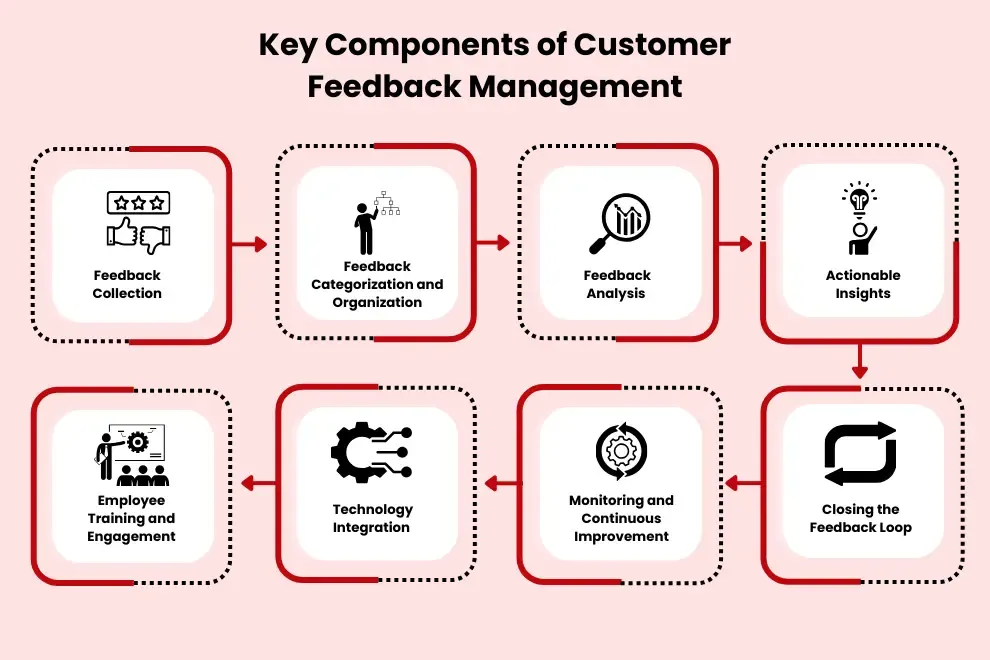
To fully implement a customer feedback strategy, it’s important to break the process into key components. Here are the main elements that contribute to effective customer feedback management:
1. Feedback Collection
The foundation of CFM lies in the process of collecting feedback. This involves gathering input from customers through various channels like surveys, social media, online reviews, chatbots, or email.
Effective feedback collection depends on using diverse methods to reach different segments of your audience. For instance, email surveys may work for one group, while social media polls could be more effective for another. Ensuring the questions are clear and focused on actionable insights is crucial.
2. Feedback Categorization and Organization
Not all feedback carries the same weight or urgency. Categorization ensures that businesses prioritize issues based on their impact, such as separating critical complaints from general suggestions or compliments.
By organizing feedback into categories—like service quality, product performance, or customer support—companies can allocate resources efficiently to address the most pressing concerns first.
3. Feedback Analysis
After collecting feedback, the next step is to analyze the data. This involves categorizing feedback into themes or topics, identifying patterns, and uncovering insights that reveal customer pain points or preferences.
Organizations can use tools like sentiment analysis, AI-driven feedback analysis software, or manual categorization to interpret the data. For example, analyzing recurring complaints about slow delivery times can highlight areas needing operational improvements.
4. Actionable Insights
Feedback is only valuable if it leads to actionable steps. Action planning involves taking the insights from feedback analysis and developing strategies to address customer concerns or enhance positive experiences.
For instance, if customers frequently highlight a need for more payment options, an action plan might involve integrating additional gateways. Effective action planning requires collaboration across departments, such as marketing, customer support, and operations.
5. Closing the Feedback Loop
One of the most critical yet often overlooked components is closing the feedback loop. This involves informing customers about the actions taken based on their feedback.
For example, if a customer suggests adding a feature to a product and it’s implemented, the company should communicate this update through an email or a social media announcement. Closing the loop not only builds trust but also encourages continued engagement.
6. Monitoring and Continuous Improvement
Customer preferences and market dynamics change over time, so CFM should be an ongoing process. Monitoring the effectiveness of implemented changes and regularly seeking feedback ensures that businesses stay aligned with customer expectations.
Regular audits, feedback cycles, and performance metrics like Net Promoter Scores (NPS) can help track progress and identify new areas for improvement.
7. Technology Integration
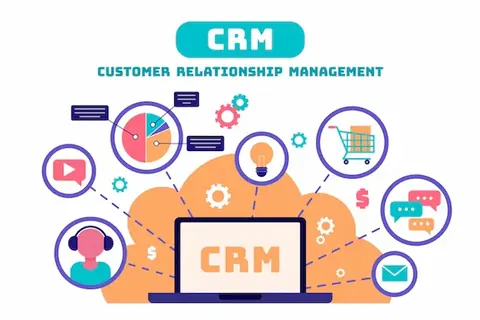
Modern CFM relies heavily on technology to streamline the process. Tools like Customer Relationship Management (CRM) software, survey platforms, and data analytics tools play a crucial role.
For example, CRM systems can centralize feedback data, while AI-powered analytics tools can provide real-time insights. Leveraging the right technology ensures scalability and efficiency in managing customer feedback.
8.Employee Training and Engagement
Employees must be equipped with the knowledge and skills to handle customer feedback effectively. Training programs should focus on active listening, empathetic communication, and conflict resolution.
Empowering teams ensures that they can address feedback constructively, turning negative experiences into positive outcomes and reinforcing customer loyalty.
Steps to Effectively Manage Customer Feedback Process
Simplifying the consumer feedback process is crucial for obtaining information and getting at accurate decisions. Below are the key steps to manage customer feedback effectively:
- Define Clear Objectives: Set clear goals for collecting feedback, such as improving satisfaction or evaluating experiences.
- Choose the Right Feedback Channels: Select the most appropriate methods for collecting feedback, such as surveys, reviews, or direct conversations.
- Analyze and Interpret the Data: Use feedback management software to analyze feedback and identify key trends or recurring issues.
- Take Action on Insights: Implement changes or improvements based on the feedback.
- Communicate Back to Customers: Let your audience know their feedback is valued and outline the steps taken based on their insights.
Best Practices for Effective Customer Feedback Management
To ensure customer feedback management is effective, follow best practices that promote engagement, accuracy, and actionable results:
1. Choose the Right Feedback Channels
Selecting the right feedback channels is essential for reaching a broad audience. Offering multiple feedback options, such as online surveys, social media polls, or in-person feedback forms, can ensure that a variety of opinions are captured.
2. Automate Feedback Collection
To save time and effort, automating feedback collection is highly effective. Using customer feedback management software or platforms that allow for seamless feedback requests and responses can streamline the process and ensure no valuable input is missed.
3. Prioritize Feedback Based on Impact
Not all feedback is equally urgent or impactful. Prioritize feedback based on its potential to influence key areas, such as improving experiences, resolving issues, or identifying new opportunities. Focus on feedback that can bring significant value.
4. Incorporate Feedback into Continuous Improvement
Feedback from customers shouldn’t be considered a one-time event. Incorporate feedback into ongoing continuous improvement processes to ensure consistent progress. This iterative process improves long-term happiness and helps keep alignment with consumer expectations.
5. Engage with Customers Regularly
Regular engagement with customers is crucial for understanding their evolving needs. By proactively seeking feedback at various stages, a deeper understanding of their experiences can be gained, fostering stronger relationships and trust.
How to Choose the Right Customer Feedback Management Tool?
Choosing the right customer feedback management tool is essential for effectively handling feedback. The ideal feedback management software should offer features like:
- An easy-to-use interface for collecting and analyzing feedback
- Integration with other tools (e.g., CRM, communication platforms)
- Automation capabilities to streamline feedback collection
- Real-time reporting and analytics to interpret customer sentiment
With tools like LazyMonkey, you can ensure a smooth, efficient feedback management process. LazyMonkey is designed to help businesses collect, analyze, and act on customer feedback with ease, offering seamless integration and automated workflows. Choosing the right tool, such as LazyMonkey, ensures that your feedback process is optimized for valuable insights and actionable outcomes.
Why wait? Upgrade to our customer feedback management software and achieve more, faster.
What Is a Feedback Management System?
A feedback management system (FMS) is the software that runs the customer feedback management process. It works as a central hub: feedback from surveys, reviews, social media, emails and direct interactions lands in one place, where teams can organize it, analyze it and act on it. Many systems also handle feedback from employees and other stakeholders, which is the focus of enterprise feedback management.
Customer Feedback Management vs Feedback Management System
The two terms are closely related, but they describe different things:
| Aspect | Customer feedback management (CFM) | Feedback management system (FMS) |
|---|---|---|
| What it is | The practice of collecting, analyzing and acting on customer feedback | The tool or platform used to carry out that practice efficiently |
| What it includes | Goals, feedback channels, analysis, action, closing the loop and monitoring | Multi-channel collection, central storage, analytics, alerts and reporting |
| Example | A restaurant chain deciding to change staffing after customers complain about wait times | The surveys and reports that surfaced the wait-time complaints |
How a Feedback Management System Works
- Collect: it gathers feedback from the channels customers use, such as surveys, review platforms, social media, email, live chat and feedback forms.
- Organize: it sorts each response by type (complaint, suggestion, compliment), by channel and by customer group, and stores everything centrally.
- Analyze: it finds patterns and trends, often using sentiment analysis to separate positive, neutral and negative feedback.
- Alert: it flags urgent feedback, such as a negative review or a service complaint, so the right team can respond straight away.
- Report: it produces regular reports that show how customer satisfaction is changing over time.
- Close the loop: it helps teams reply to customers and tell them what changed because of their feedback.
Key Features of a Feedback Management System
Beyond the basics listed above for choosing a tool, a feedback management system should offer:
- Multi-channel collection, so feedback from every touchpoint ends up in one place.
- Customizable feedback forms that can be sent by email, embedded on a website, used in an app or opened from a QR code.
- Categorization by feedback type, channel and customer segment.
- Sentiment analysis to help decide which responses need attention first.
- Real-time alerts that notify the responsible team about urgent concerns before they escalate.
- Trend reports that track the health of customer satisfaction over time.
LazyMonkey's feedback management system, for example, collects feedback when customers scan a QR code, with no app to install, escalates issues to the right person and shows results on real-time dashboards across multiple locations.
Feedback management usually draws on several kinds of tools: survey and form tools for collection, social listening tools for public comments, analytics tools for sentiment and trends, CRM systems to centralize customer data, and helpdesk tools for replying to customers. Our guide to customer feedback management tools compares the options.
How AI Is Used in Customer Feedback Analysis
Analyzing feedback by hand works when volumes are small. As responses grow, manual review becomes slow, misses insights, struggles to scale and is open to personal bias in how comments are read. AI-based feedback analysis addresses these limits:
- Sentiment analysis: natural language processing (NLP) classifies comments as positive, neutral or negative and picks up the emotion behind them, so issues that hurt satisfaction can be prioritized.
- Theme extraction: AI pulls key topics and recurring phrases out of open-text answers, reviews and social media mentions. A feature that keeps appearing in positive reviews, for example, is likely a strong selling point.
- Voice analysis: customer calls can be transcribed and analyzed in the same way as written feedback.
- Summaries: AI can condense large volumes of feedback into short, easy-to-read summaries that product and service teams can act on.
- Predictive insights: historical feedback can highlight churn risks and shifts in customer preferences.
- Speed and scale: thousands of survey responses or social media mentions can be processed far faster than by manual review, so teams spend their time acting on insights rather than sorting data.
Challenges of AI Feedback Analysis
AI analysis also needs care. Customer data must be kept secure, and customers should know how their feedback is used and give their consent. Adopting AI tools involves upfront costs for the software, staff training and integration with existing workflows. Detailed sentiment breakdowns and predictive reports can also be hard to interpret for teams without technical expertise, so choose tools that present results simply and train the people who will use them.
How to Monitor and Refine the Feedback Management Process
Customer feedback management is never finished. Once the process is running, check regularly that it is producing results and adjust it as customer expectations change.
- Set measurable goals. Tie the process to targets you can track, such as higher ratings or shorter response times.
- Track satisfaction metrics. Use Net Promoter Score (NPS) and customer satisfaction (CSAT) surveys to see whether changes are working.
- Measure each initiative. Check whether a change improved feedback on that area, adjust strategy in response to emerging trends, and deal with potential issues before they escalate.
- Acknowledge feedback quickly. Reply promptly even when a fix will take time. Automated acknowledgements help make sure no feedback goes unanswered.
- Segment feedback. Group it by factors such as demographics, purchase history or behavior to see how the needs of different customer groups differ. High-value customers, for example, may need tailored solutions.
- Be transparent. Tell customers how their feedback will be used. People give more honest feedback when they know it leads to action.
- Build a feedback culture inside the organization. Encourage employees, stakeholders and management to take part in the feedback process too.
Customer Feedback Management Examples
Here is how the process looks in practice:
- Improving service: a restaurant chain uses customer surveys to measure satisfaction, finds problems with wait times and adjusts staffing levels.
- Refining a product: a software company receives feedback that its interface is confusing and simplifies navigation in the next update, which leads to better user reviews.
- Training staff: a retail store gathers feedback about staff interactions and uses it in training to improve the customer experience.
Conclusion
In conclusion, customer feedback management is an essential practice for improving customer experiences, understanding needs, and enhancing satisfaction. By effectively collecting and analyzing feedback, insights can be gained that lead to positive change. Using the right customer feedback management system, feedback management software, and a well-defined customer feedback strategy makes the feedback process efficient and valuable.
Whether through surveys, reviews, or conversations, managing customer feedback effectively allows for continuous improvement and alignment with customer needs. By following best practices and utilizing the right tools, the process becomes smoother, leading to better outcomes and more satisfied customers.
Frequently Asked Questions
What Is Customer Feedback Management?
Customer feedback management (CFM) is the process of collecting, analyzing, and using feedback from customers to improve a business.
Why Is Customer Feedback Important?
Customer feedback helps businesses understand their customers’ needs, preferences, and pain points.
How Can Businesses Collect Customer Feedback?
Businesses can collect feedback through surveys, customer reviews, social media, direct interviews, and support tickets
How Often Should Businesses Gather Customer Feedback?
It depends on the business type, but regular feedback after major updates, purchases, or service interactions is recommended.
What Is the Purpose of a Feedback Management System?
A feedback management system brings feedback from customers, and often from employees or other stakeholders, into one place so it can be organized, analyzed and acted on. It helps businesses resolve issues faster, spot trends and close the loop with customers.
How Does AI Help Analyze Customer Feedback?
AI uses natural language processing to sort feedback by sentiment, pull out recurring themes from text and call transcripts, and summarize large volumes of responses quickly. This lets teams see what matters most and act on it sooner.
Can AI Analyze Customer Feedback in Multiple Languages?
Yes. AI tools can analyze feedback written in multiple languages, which is useful for businesses whose customers do not all use the same language.
Filed under Feedback Management · First published